

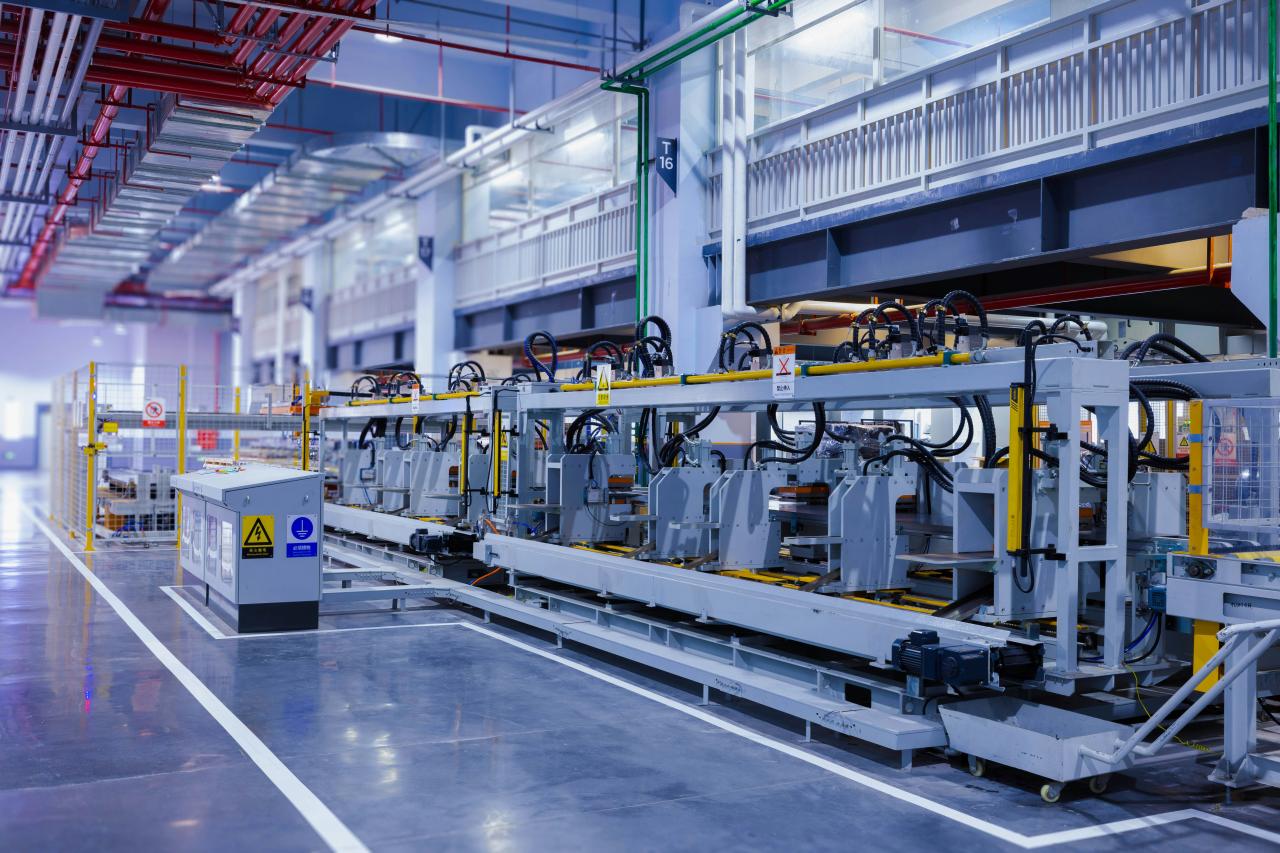
The institutional landscape of physical manufacturing has reached a definitive structural realignment, transitioning from the era of rigid robotic programming toward a disciplined phase of decentralized machine coordination and multi-agent system alpha. As global capital markets stabilize and the demand for self-organizing production lines in the semiconductor, automotive, and aerospace sectors remains a primary strategic consideration, the differentiation of high-performing industrial assets is no longer defined by simple mechanical throughput but by the sophisticated integration of autonomous reasoning loops, edge-based swarm intelligence, and advanced vertical integration.
This great reset has created a definitive bifurcation in the market, where firms leveraging “Algorithmic Sovereignty” and aggressive investment in multi-agent systems are securing significant outperformance—often realizing facility-wide efficiency gains exceeding 40%—over generic operators who remain tethered to centralized, fragile logic controllers. Institutional decision-makers and industrial technology officers are increasingly treating factory floors as integrated compute-capture environments rather than simple assembly lines, prioritizing architectures that demonstrate clear value expansion through high-margin downtime reduction and aggressive operational agility.
The emergence of specialized “Machine-Agent-Swarms” and private industrial-mesh networks has enabled a new level of fiscal transparency and agility, allowing enterprises to execute complex custom-manufacturing runs with a level of precision previously reserved for small-scale artisanal production. For the forward-thinking Chief Operating Officer, mastering the nuances of asynchronous task allocation, consensus-based conflict resolution, and standardized communication protocols between heterogeneous robotic agents is the only way to ensure the long-term liquidity and high-yield profile of a premier industrial transformation portfolio. As we witness the convergence of 6G-enabled edge computing and the rising demand for private, high-fidelity sovereign supply chains, the mastery of performance-based multi-agent orchestration provides the essential alpha required to lead the next cycle of global manufacturing efficiency.
This comprehensive analysis explores the technical and economic mechanics of multi-agent systems for industrial automation, providing a detailed roadmap for those ready to capitalize on the most resilient and profitable strategic assets in the current market landscape. The implementation of advanced multi-agent performance standards has reached a level of maturity that allows for the total transformation of legacy factory operations and physical asset management. Operators are now utilizing these rigorous event-driven frameworks to drive higher valuation multiples and secure preferential capital positioning in a competitive global environment.
Institutional-Grade Decentralized Coordination and Swarm Logic

The primary pillar of the multi-agent economy is the transition from centralized PLC control to institutional-grade decentralized coordination.
In this model, each machine or robot acts as an autonomous agent capable of making local decisions based on real-time environmental data and global production goals.
High-performing systems in this space utilize swarm logic to ensure that if one unit fails, the remaining agents automatically redistribute the workload without human intervention.
Investors favor platforms that can demonstrate a proven reduction in “systemic-fragility” through decentralized logic.
The ability to turn a rigid assembly line into a fluid, self-organizing ecosystem is a hallmark of a sophisticated technology operator.
Decentralized coordination is the physical engine that drives modern transactional alpha outperformance.
High-Fidelity Asynchronous Task Allocation and Resource Balancing
The efficiency-gap of traditional sequential manufacturing is being closed by high-fidelity asynchronous task allocation.
Multi-agent systems allow for non-linear production paths, where agents negotiate for access to resources—such as CNC machines or 3D printers—based on the urgency of the specific order.
Sophisticated systems are now deploying sub-second bidding protocols where agents “buy” time on shared assets to maximize the facility’s overall net present value.
Owners who prioritize proprietary negotiation algorithms see a marked improvement in the “bankability” of their industrial assets.
Innovation in resource balancing is the strategic moat that protects the brand from becoming a mere commodity provider.
Asynchronous allocation is the intelligence engine that drives modern digital yield.
Heterogeneous Agent Interoperability and Standardized Protocols
A critical challenge in the industrial sector is ensuring that robots from different manufacturers can communicate and collaborate within a single multi-agent framework.
Venture-backed winners are those developing standardized communication protocols—often based on ROS 2 or OPC UA—to enable “Plug-and-Produce” interoperability.
Heterogeneous interoperability allows an enterprise to mix and match the best-of-breed hardware while maintaining a unified cognitive control layer.
Integrated interoperability often leads to higher institutional trust and lower operational risk profiles.
The reduction in “vendor-lock-in” through standardized protocols is highly valued by global automotive and semiconductor firms.
Standardized communication is the operational stability pillar of the modern technology asset.
Strategic Vertical Integration and Private Edge-Cloud Arbitrage
The final value-capture in the autonomous industrial sector occurs at the stage of vertical integration within private edge-cloud environments.
Vertical integration—where a firm owns the agents, the private mesh network, and the local compute stack—allows for total control over latency and data security.
This approach transforms a simple factory into a high-tech data powerhouse, commanding significantly higher valuation multiples from institutional investors.
Integrated edge models often lead to 20% – 30% “efficiency-premiums” over firms using generic, high-latency public cloud solutions.
The reduction in “cyber-physical-risk” through private infrastructure is highly valued by global defense and high-precision manufacturers.
Vertical integration is the capital engine that powers high-yield digital performance.
Real-Time Predictive Maintenance and Self-Healing Infrastructure
To hedge against operational risk, sophisticated multi-agent systems are implementing real-time predictive maintenance that monitors vibration, temperature, and torque.
Agents within the swarm can “sense” when a peer is approaching failure and trigger a maintenance request or automatically reroute production to healthy units.
High-fidelity self-healing is no longer an option but a requirement for accessing premium aerospace and pharmaceutical manufacturing markets.
Sophisticated decision-makers utilize these maintenance cycles to manage internal compliance and anticipate future regulatory shifts.
Firms that prioritize “uptime-assurance” over immediate throughput speed see a marked improvement in their long-term contract stability.
Predictive maintenance is the gatekeeper of the next generation of resilient industrial ecosystems.
Performance-Based Feedback Loops and Continuous Swarm Optimization
The discovery of production bottlenecks is being accelerated by performance-based feedback loops that analyze every interaction between agents.
Companies are utilizing AI to predict when a specific agent configuration will lead to a “logistical-deadlock” and proactively adjust the swarm’s behavior.
Sophisticated teams are now deploying sub-second data transmission from factory-floor sensors to guide real-time swarm optimization.
Understanding these technical disparities is critical for portfolio rebalancing in a sector with high capital expenditure requirements.
High-fidelity data removes the “valuation-lag” associated with opaque manual production reports.
Swarm optimization is the analytical compass for the modern technology investor.
High-Margin Downtime Displacement and ROI Quantitization
The most significant returns are found in multi-agent systems that can effectively manage and displace high-margin unplanned downtime.
By allowing the system to reconfigure itself in seconds rather than hours, enterprises can reclaim their maintenance budgets for innovation rather than mere repairs.
This “downtime-displacement” allows manufacturers to achieve higher utilization rates on their most expensive capital assets.
Investors prioritize companies that can demonstrate a clear “near-monopoly” over high-value self-healing logic.
A seamless resident experience within the autonomous factory is now a primary performance metric for strategic industrial providers.
Downtime displacement is the strategic moat that protects the long-term value of the physical asset.
On-Chain Traceability and Compliant Manufacturing Sourcing
The transparency-gap in global supply chains is being closed by on-chain traceability that records the provenance of every component handled by the agents.
These “Digital-Passports” provide immutable proof that the product was manufactured securely and meets all regulatory safety standards.
High-fidelity traceability is essential for maintaining “Operational-Sovereignty” in a world of increasing trade and security regulations.
Integrated traceability improvements often lead to a “premium-pricing” model for verified secure industrial components.
The reduction in “legal-risk” through transparent sourcing is highly valued by global enterprise and finance firms.
On-chain traceability is the verification-mechanism for the twenty-first-century digital corporation.
AI-Driven Facility Simulation and Digital Twin Synchronization
The future of multi-agent automation belongs to systems that utilize AI-driven facility simulation and digital twin synchronization.
Before a single robot is deployed, the entire multi-agent swarm is “trained” in a high-fidelity simulation to ensure optimal performance.
Digital twins allow for real-time synchronization between the virtual and physical world, enabling remote operators to visualize and tweak agent behavior.
Owners who prioritize “simulation-IP” see a marked improvement in the speed of facility deployment.
The ability to achieve “relevance-at-scale” in complex virtual-to-physical environments is the hallmark of a sophisticated technology operator.
Digital twin synchronization is the digital highway of the high-performance technology asset.
Strategic Labor Reallocation and Human-in-the-Loop Governance
The final secret to multi-agent alpha is identifying how to reallocate human talent to higher-value strategic and governance roles.
By automating the “dangerous-dirty-dull” tasks of the factory, human workers can focus on product design, quality assurance, and high-level swarm management.
Human-in-the-loop governance ensures that the autonomous systems remain aligned with the organization’s ethical and strategic production goals.
Transparency in talent management is essential for securing “institutional-grade” capital for further technology expansion.
Performance-based tracking ensures that the industrial budget is being applied toward maximizing the “acquisition-value” of the facility.
Talent reallocation is the verification-mechanism for the twenty-first-century strategic industrial provider.
Conclusion

High-yield industrial performance is now driven by multi-agent precision and digital integration. The transition toward self-organizing factories is a prerequisite for achieving institutional-scale trust. Regulated multi-agent platforms provide the most mature and compliant entry points for industrial automation. Real-time swarm coordination eliminates the operational errors inherent in traditional centralized control. Asynchronous task allocation ensures that physical output remains accurate and high-fidelity across the facility. Vertical integration into private edge-cloud networks transforms static factories into active, high-margin cognitive platforms.
Strategic predictive maintenance provides the essential link to global safety standards that anchor the assetvalue. Automated error correction allows for the efficient delivery of products without traditional manual downtime. Human-in-the-loop models provide a unique safety-hedge for organizations exposed to regulatory risk. On-chain traceability enables domestic firms to manage industrial property without security leaks. High-fidelity feedback loops provide the data-integrity required for continuous, optimal scaling. The future of business growth belongs to those who view industrial automation as a high-performance technology platform.