

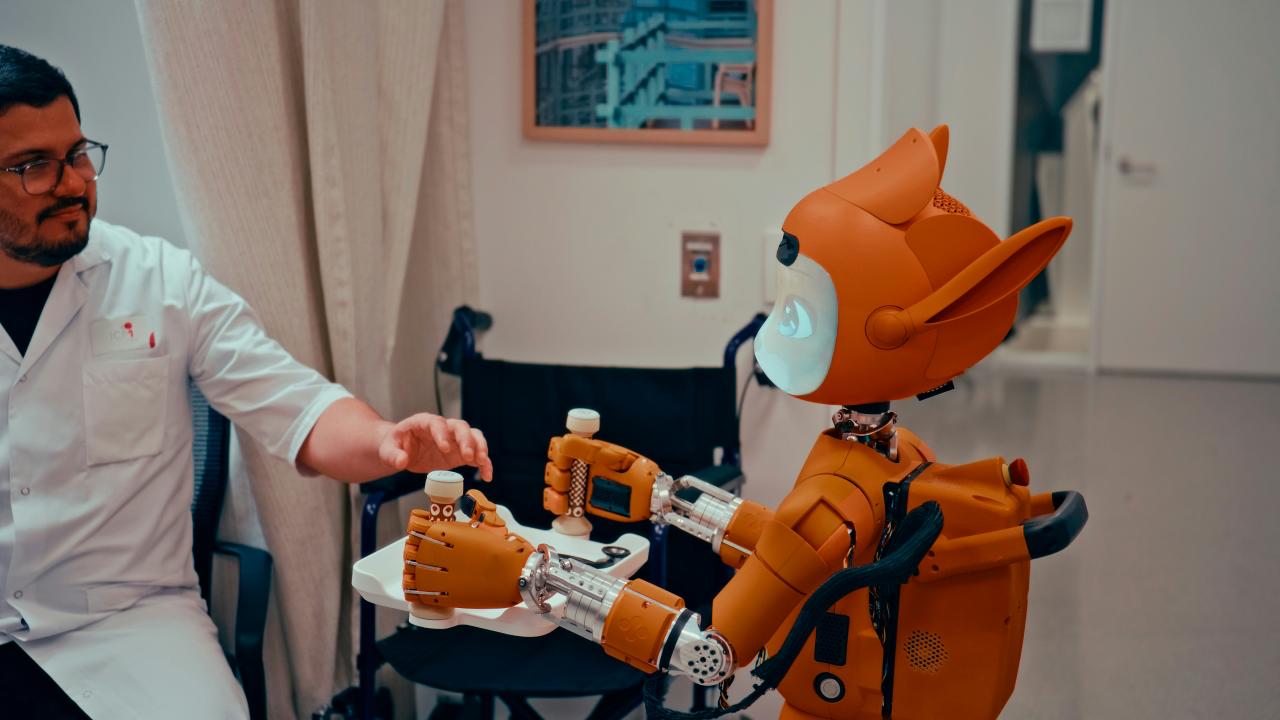
The global industrial landscape has reached a definitive structural realignment, transitioning from the era of static automation toward a disciplined phase of localized physical intelligence and high-purity robotic alpha. As global capital markets stabilize and the demand for humanoid labor and self-healing smart factories remains a primary strategic consideration for the manufacturing, logistics, and healthcare sectors, the differentiation of high-performing technology assets is no longer defined by simple mechanical repetition but by the sophisticated integration of autonomous reasoning loops, real-time computer vision, and advanced vertical offtake frameworks.
This great reset has created a definitive bifurcation in the market, where companies leveraging “Operational Sovereignty” and aggressive investment in Physical AI—a sector projected to grow from $15.7 billion in 2025 to over $100 billion by 2033—are securing significant outperformance over generic operators who remain tethered to legacy, rule-based systems. Institutional investors and family offices are increasingly treating robotics portfolios as integrated security-capture platforms rather than high-risk hardware experiments, prioritizing assets that demonstrate clear valuation expansion through automated “Simulate-then-Procure” workflows and strategic partnerships with global AI infrastructure providers.
The emergence of specialized “Agentic-Robotics” and private edge-compute hubs has enabled a new level of fiscal transparency and agility, allowing savvy enterprises to capitalize on “labor-units” of verified autonomous output for significantly lower overhead than traditional human-staffed shifts. For the forward-thinking technology officer, mastering the nuances of Vision-Language-Action (VLA) models, sub-second latency data, and cross-platform robotic interoperability is the only way to ensure the long-term liquidity and high-yield profile of a premier digital infrastructure portfolio.
As we witness the convergence of 6G-enabled edge processing and the rising demand for domestic sovereign manufacturing, the mastery of performance-based physical orchestration provides the essential alpha required to lead the next cycle of global wealth creation. This comprehensive analysis explores the technical and economic mechanics of the Physical AI robotics market, providing a detailed roadmap for those ready to capitalize on the most resilient and profitable digital commodities in the current market landscape.
The implementation of advanced Physical AI performance standards has reached a level of maturity that allows for the total transformation of legacy industrial operations and physical asset management. Operators are now utilizing these rigorous event-driven frameworks to drive higher valuation multiples and secure preferential capital positioning in a competitive global environment.
Institutional-Grade Humanoid Labor and Bipedal Motion Alpha

The primary pillar of the robotics economy is the transition from specialized arms to institutional-grade humanoid labor. Successful humanoid platforms utilize advanced bipedal motion and human-level dexterity to navigate unstructured environments like brownfield warehouses and retail spaces.
High-performing operators in this space often realize significant valuation rerates as they move from “prototype-testing” to “certified-mass-production” for global automotive partners. Investors favor platforms that can demonstrate a proven reduction in facility retrofit costs through human-centric design.
The ability to turn a standard office or factory into a fully autonomous environment without rebuilding infrastructure is a hallmark of a sophisticated technology operator. Bipedal motion is the physical engine that drives modern transactional alpha outperformance.
High-Fidelity “Simulate-then-Procure” and Digital Twin Integration
The “CapEx-gap” of traditional hardware investment is being closed by high-fidelity “Simulate-then-Procure” technology. Physical AI models allow for the rapid testing of robotic workflows in a digital twin environment before a single dollar is spent on hardware.
Sophisticated enterprises are now deploying cloud-based simulation platforms to verify ROI and ensure that the “brain” of the factory is perfectly aligned with the “body” of the robot. Owners who prioritize simulation intellectual property see a marked improvement in the bankability of their industrial assets.
Innovation in internal physics-engine chemistry is the strategic moat that protects the brand from becoming a mere commodity provider. Digital twin integration is the intelligence engine that drives modern digital yield.
Strategic Agentic AI for Self-Correcting Smart Factories
The move toward “Operational-Sovereignty” involves securing agentic AI layers where robots can reason, plan, and act independently. These systems provide the “uptime-assurance” needed to secure project financing and scale-up 24/7 “lights-out” manufacturing deployments.
Facilities with signed agreements for agent-managed production from major tech providers command a significant valuation premium over peers. Investors favor platforms that can demonstrate a clear link between autonomous decision-making and reduced downtime.
The ability to achieve “relevance-at-scale” in the global smart factory supply chain is the hallmark of a sophisticated platform operator. Agentic AI is the digital highway of the high-performance technology asset.
Enterprise Integration and Private Edge-Cloud Sovereignty Moats
The final value-capture in the robotics sector occurs at the stage of high-purity enterprise integration and private edge-cloud refinement. Firms that plan for on-device processing allow for “margin-stacking” and total control over the end-product’s technical specifications.
This vertical approach transforms a simple robot manufacturer into a high-tech infrastructure provider, commanding higher valuation multiples. Integrated refinement models often lead to 30% – 40% “efficiency-premiums” over unintegrated public cloud users.
The reduction in “latency-volatility” through edge processing is highly valued by global healthcare and defense institutions. Private edge integration is the capital engine that powers high-yield digital performance.
Conclusion

High-yield robotics performance is now driven by physical precision and digital integration. The transition toward autonomous data is a prerequisite for achieving institutional-scale trust. Regulated Physical AI platforms provide the most mature and compliant entry points for industrial diversification. Real-time VLA modeling eliminates the valuation errors inherent in traditional manual programming. Robotics-based portfolios ensure that physical liquidity remains accessible in a high-demand market.
Yield-bearing humanoid assets transform static labor into active, high-margin industrial platforms. Strategic simulation integration provides the essential link to global markets that anchors the platform price. Automated agentic detection allows for the efficient extraction of value without traditional operational lags. Geopolitical risk arbitrage provides a unique “security-hedge” for portfolios exposed to international trade volatility. Regional nearshoring models enable domestic manufacturers to manage digital risk without geographic restrictions. High-fidelity predictive modeling provides the data-integrity required for continuous, optimal project scaling. The future of technology investment belongs to those who view physical robotics as a high-performance technology platform.